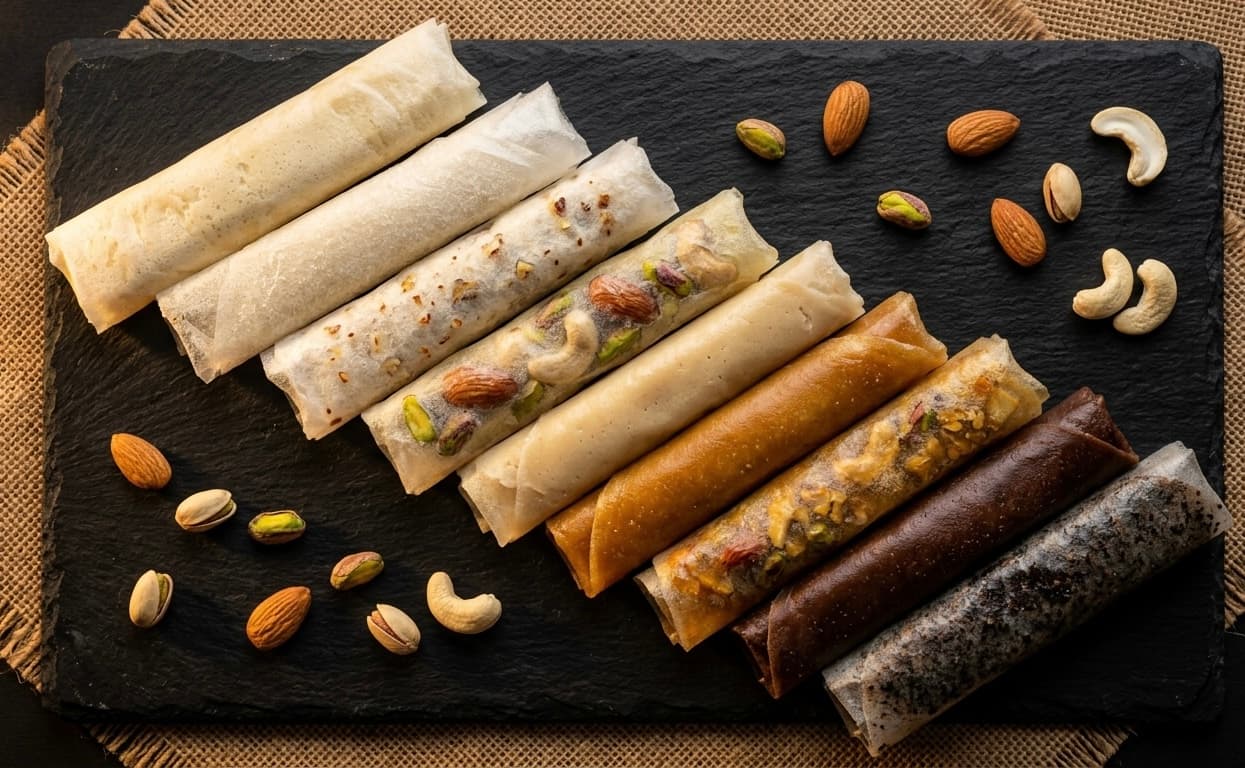
Pootharekulu, also spelled Putharekulu, is a traditional Andhra sweet from Atreyapuram made with paper-thin rice sheets, ghee, sugar or jaggery, and dry fruits.
Pootharekulu is a traditional Andhra sweet from Atreyapuram, East Godavari. It is made from paper-thin rice sheets, pure desi ghee, and fillings such as sugar, jaggery, and dry fruits. It is also commonly called Paper Sweet.
What is Pootharekulu?
Pootharekulu is one of Andhra Pradesh’s most delicate sweets. The name is often written in several ways, including Pootharekulu, Putharekulu, and Pootharekhulu. In English, it is commonly referred to as Paper Sweet because of its ultra-thin rice sheets.
The sweet is known for its light texture and layered preparation. A piece looks fragile, almost like edible paper, but it carries the richness of ghee and the sweetness of its filling. That contrast is a big part of what makes Pootharekulu special.
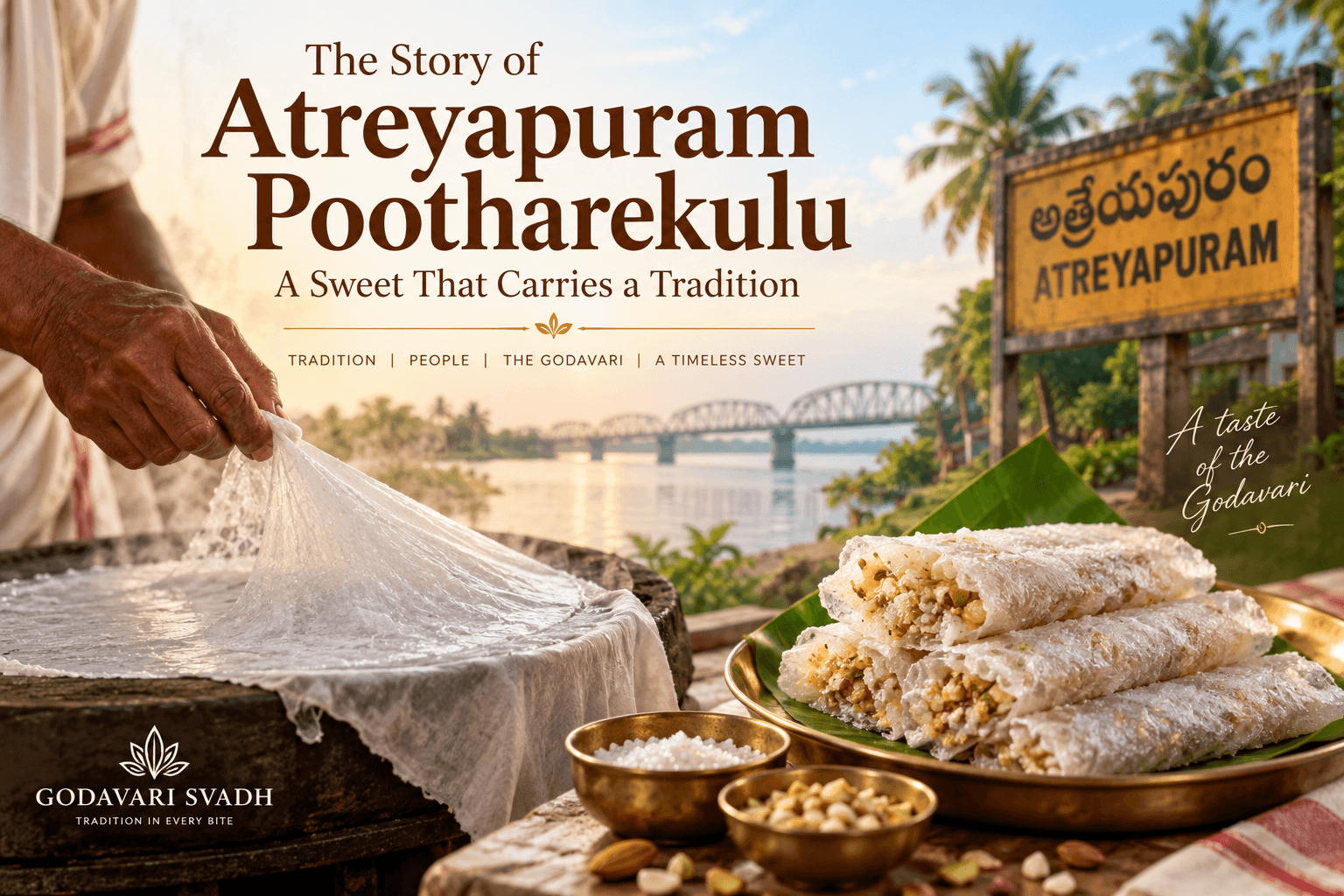
If you want the full story of how this sweet became part of Atreyapuram’s identity, see our guide to the story of Atreyapuram Pootharekulu.
What does “Pootharekulu” mean in English?
The name comes from two Telugu words:
- Pootha (పూత) meaning coating
- Rekulu (రేకులు) meaning sheets or layers
Put together, the name describes the sweet very well: a coated sheet or layered sheet. That is why the English description “Paper Sweet” is so fitting. The sweet is built from thin rice sheets that are folded and filled, rather than made from dough, syrup, or fried batter.
Where does Pootharekulu come from?
Pootharekulu originates exclusively from Atreyapuram, a small mandal in the East Godavari district of Andhra Pradesh. The town sits on the banks of the Godavari river, and the sweet has been made there for generations.
According to the supplied information, more than 400 families in Atreyapuram depend on making Pootharekulu for their livelihood. It is described as a cottage industry and a living tradition, and it is also a GI-tagged heritage food, meaning the Government of India has officially recognised Atreyapuram as the only authentic origin of this sweet.
Quick facts
- Origin: Atreyapuram village, East Godavari, Andhra Pradesh
- Other names: Paper Sweet, Putharekulu, Pootharekhulu, Atreyapuram Sweet
- Main ingredients: Rice starch (Jaya Biyyam), pure desi ghee, sugar or jaggery, dry fruits
- Shelf life: 7 days at room temperature, 15 days refrigerated
- Families involved: 400+ families in Atreyapuram
What is Pootharekulu made of?
At its core, Pootharekulu is made from a few simple ingredients: rice starch, ghee, sugar or jaggery, and dry fruits. The main rice used is Jaya Biyyam. The rice is soaked and ground into a very thin batter, which is then used to create the delicate sheets.
The classic version uses powdered sugar and pure ghee. Other varieties use jaggery, dry fruits, khoya, chocolate, or modern fillings such as Oreo, Horlicks, and Boost. Even with these variations, the base sweet remains the same: a handmade rice sheet wrapped around a rich filling.
How is Pootharekulu made?
The making of Pootharekulu is a skilled process that depends on speed, timing, and experience. It cannot be rushed, and it cannot be properly replicated by machine.
Step 1: The rice batter
Jaya Biyyam is soaked and ground into an ultra-thin batter. The batter has to be light enough to form a sheet, but not so thin that it breaks.
Step 2: The earthen pot
A large clay pot, called a matti kunda, is heated over a wood fire. A damp cotton cloth is stretched over the mouth of the pot. The steam rising from the pot becomes the cooking surface.
Step 3: Spreading the sheet
Using a bare hand, the artisan spreads a thin layer of batter on the cloth. In seconds, the steam cooks it into a translucent rice sheet.
Step 4: Adding the filling
Once the sheet is lifted, pure desi ghee is brushed over it. Then sugar or jaggery is added, along with dry fruits such as almonds, cashews, and pistachios.
Step 5: Rolling
Several sheets are stacked and rolled together carefully. The final sweet is a delicate cylinder that is firm enough to hold shape but soft enough to melt in the mouth.
This handcrafted method is the heart of Pootharekulu. The article’s supplied details also note that the exact pressure of the palm, the speed of the spread, and the reading of the steam are skills that live in the hands of Atreyapuram’s women artisans.
What are the different types of Pootharekulu?
Traditionally, Pootharekulu was made with only two fillings: sugar and jaggery. Over time, more varieties were introduced while keeping the same traditional base.
Classic Sugar
This version uses powdered sugar, pure ghee, and a hint of cardamom. It is described as the original and simplest version.
Bellam (Jaggery)
This uses jaggery instead of sugar. It has an earthier and richer flavour.
Dry Fruit
This version includes almonds, cashews, and pistachios. It is more premium and richer in texture.
Kova (Khoya)
This variant uses milk solids for a richer dairy-forward taste.
Chocolate
This modern version includes cocoa filling inside the rice sheets.
Fusion varieties
Modern fillings such as Oreo, Horlicks, and Boost are also used. These versions are described as popular for children and gifting to non-Telugu audiences.
Why does Pootharekulu taste different from other Indian sweets?
Pootharekulu tastes different because it is not dense, fried, or syrup-heavy like many other sweets. The rice sheet itself is light and neutral, so it carries the flavour of the filling instead of competing with it.
The first taste is usually ghee, followed by sweetness and the crunch of dry fruits if included. Then it disappears quickly, leaving a soft aftertaste and a very light texture. That quick melt is one reason people remember it so clearly.
Is Pootharekulu healthy?
The supplied article presents Pootharekulu as relatively lighter than many Indian sweets. Based on that information:
- It is not deep fried.
- It uses pure desi ghee rather than vanaspati.
- Dry fruits add texture and are part of several varieties.
- Jaggery versions are described as a more natural alternative to refined sugar.
- Authentic versions do not use preservatives or artificial colours.
That said, Pootharekulu is still a sweet and should be enjoyed in moderation. The article’s point is not that it is a health food, but that its ingredient profile is simpler and its preparation is lighter than many fried sweets.
How long does Pootharekulu last?
A common question is about Pootharekulu shelf life. According to the supplied information, Pootharekulu lasts:
- 7 days at room temperature
- 15 days when refrigerated
For storage, keep it in a cool, dry place in an airtight container, away from direct sunlight. If refrigerated, it should be brought back to room temperature before eating, because cold storage can firm up the ghee and reduce the flavour. It is also best kept away from strong-smelling foods, since the delicate sheets can absorb odours.
How to identify authentic Pootharekulu
Because there are many sellers online, it helps to know what authentic Pootharekulu should look and feel like.
- It should be GI-tagged.
- It should melt in the mouth, not feel dry or powdery.
- The ghee should smell real and warm, not flat or greasy.
- It should be made fresh.
- The seller should clearly state that the sweet is made with Atreyapuram artisans.
The supplied article also notes that if a seller claims a very long shelf life without refrigeration, preservatives may be involved.
Why Pootharekulu works so well as a gift
Pootharekulu is a strong gifting sweet because it feels personal and memorable. It is not the kind of sweet people expect every day, which makes it feel special when given for festivals, weddings, baby showers, or corporate gifting.
The article mentions it as a good choice for Diwali, Sankranti, Ugadi, Rakhi, weddings, and baby showers. The mix of tradition, delicate texture, and variety also makes it a popular option for people who want to share a taste of Andhra Pradesh.
Frequently asked questions
What is Pootharekulu in English?
It is commonly called Paper Sweet.
What is the meaning of Pootharekulu?
The name comes from Telugu words meaning coating and sheets/layers.
Is Pootharekulu and Putharekulu the same?
Yes. They are the same sweet, just different spellings.
Can Pootharekulu be made outside Atreyapuram?
Technically yes, but the supplied article says it is not authentic outside Atreyapuram and that the traditional technique is associated with Atreyapuram families.
Is Pootharekulu gluten-free?
Yes. The rice sheets are made from rice starch, not wheat flour.
How many pieces are in one box?
The supplied article says standard boxes contain 10 pieces.
Can I order Pootharekulu in bulk?
The article says bulk and corporate gifting orders are handled, including wedding favours and festive hampers.
Final note
Pootharekulu is more than a sweet from Andhra Pradesh. It is a handmade tradition from Atreyapuram, built on delicate rice sheets, ghee, and careful craft. If you were searching for what Pootharekulu means, what it is made of, where it comes from, or how long it lasts, the short answer is: it is a paper-thin, handcrafted sweet from Atreyapuram with a texture and heritage unlike any other.
For more on its background and tradition, read the story of Atreyapuram Pootharekulu.